
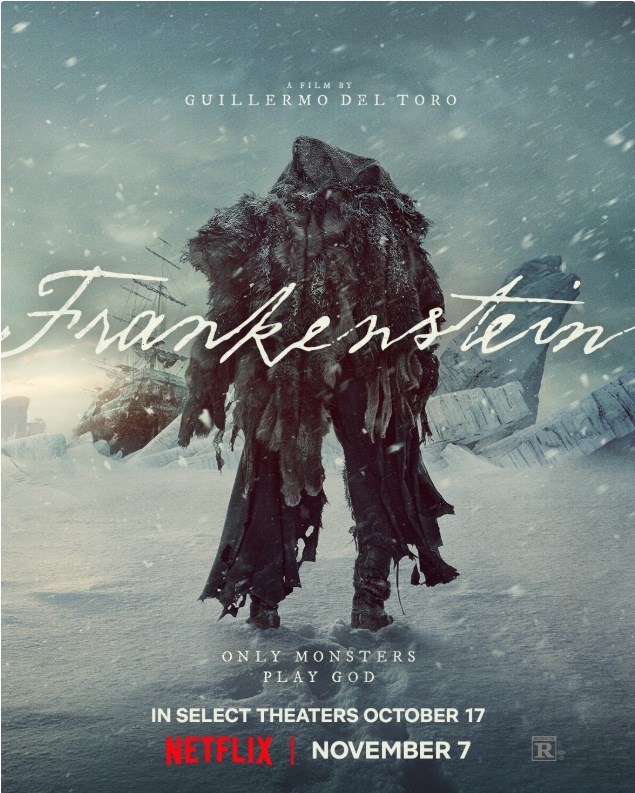
I watched Guillermo del Toro’s Frankenstein last night, and as both a long‑time admirer of del Toro’s work and a devoted fan of Mary Shelley’s novel, I went in with high expectations.
The film is visually stunning: every frame feels meticulously crafted, with gothic architecture, sumptuous interiors, and atmospheric landscapes that echo the novel’s mood. The performances are equally strong, with Oscar Isaac bringing intensity to Victor Frankenstein, Jacob Elordi embodying the Creature’s tragic presence, and Mia Goth reimagining Elizabeth in a role that diverges from Shelley’s original.
Yet despite all this, I found myself slightly underwhelmed. The story is compelling, the themes resonate, and the acting is superb, but the film left me colder than I expected. The reason, I think, lies in its tone. Del Toro’s adaptation leans heavily into empathy and tragedy, softening the horror that defines Shelley’s novel. In the book, Victor is flawed but sympathetic, while the Creature inspires both pity and dread. Crucially, Shelley does not shy away from the monster’s vengeance: the murders of Victor’s brother William and his bride Elizabeth are shocking, chilling acts that cement the novel’s power.
In del Toro’s version, Elizabeth exists but her relationship to Victor is reimagined, and the brutal wedding‑night murder is absent. This shifts the narrative away from horror toward melancholy. While the film succeeds in exploring themes of loneliness, humanity, and compassion, it loses some of the novel’s terrifying nuance. For me, that balance of sympathy and horror is what makes Frankenstein endure as a masterpiece of gothic fiction.
Del Toro’s Frankenstein is undeniably beautiful and moving, but it trades the novel’s chilling edge for a more tragic, empathetic lens. Powerful, yes – but less haunting.
Check out my review of the novel in my Five Favourite Creepy Stories post.